
Technology

The Dark Web, Demystified: History, Uses, Risks—and 10 Things You Should Know

The dark web, encompassing technologies like Tor, I2P, and Hyphanet, offers both risks and valuable functions such as privacy and censorship resistance. By 2025, it features a diverse landscape of legitimate and criminal activity. Understanding its complexities is essential for professionals, journalists, and policy-makers to navigate effectively and responsibly.
Neurosymbolic AI: Blending Logic and Neural Networks for Explainable Reasoning

Neurosymbolic AI integrates the strengths of symbolic reasoning and neural networks, addressing limitations in both paradigms. By combining adaptive pattern recognition with structured logic, it enables explainable and trustworthy AI applications across healthcare, robotics, and natural language processing. This approach aims to enhance AI’s robustness, generalization, and transparency in critical domains.

The Future of AI-Driven Technology (Part 2)

Artificial intelligence (AI) has evolved into a critical transformative force, impacting various domains including business, healthcare, and society. This article explores AI’s historical context, current applications, and future implications while emphasizing the importance of ethical considerations and interdisciplinary approaches. Successful strategies, such as Norway’s national AI strategy, highlight the need for responsible integration of AI technologies.

The Future of AI-Driven Technology: A Comprehensive Exploration

Artificial Intelligence (AI) is a transformative force reshaping industries and human interactions. Originating in the mid-20th century, AI has evolved significantly with advancements like machine learning and deep learning. Its applications span healthcare, finance, and transportation, raising ethical concerns about privacy and job displacement. The future presents both challenges and opportunities for equitable innovation.

Stellar Cataclysms and Structural Resilience

The article explores how insights from neutron star collisions can inform Earth-bound engineering, particularly for creating earthquake-resistant and high-compression materials. By studying the structural resilience of neutron stars, engineers can develop innovative materials and design principles to enhance infrastructure resilience against natural disasters and ensure durability in extreme conditions.

Integration of AI in Consumer Electronics: Enhancing User Experiences and Shaping the Future of Technology

AI has increasingly integrated into consumer electronics, enhancing functionality, personalization, and user interactions across devices like laptops, gaming consoles, and smart home appliances. This trend promotes automation and intelligent assistance, while also raising challenges related to privacy, ethics, and complexity. The future promises even deeper AI integration, revolutionizing daily experiences.

The Algorithmic Therapist: AI’s Double-Edged Sword in the Mental Health Revolution

The article discusses the paradox of increasing global connectivity alongside a rise in mental health issues, highlighting nearly one billion people affected. It explores AI’s role in mental healthcare, offering hope for accessible treatment while raising ethical concerns about privacy, bias, and human connection. A responsible integration of AI is crucial for future mental health.

Advancements in Explainable AI (XAI): Ensuring Transparency and Trust in AI Systems

As AI integrates into critical sectors like healthcare and finance, the field of Explainable AI (XAI) emerges to enhance transparency in decision-making. XAI aims to build trust and fairness by making complex AI systems interpretable, addressing challenges such as the trade-off between model performance and explainability, and ethical biases.

Agentic AI and the Emergence of the Agentic Web: A Comprehensive Exploration

The article by Dr. Journalister Mary explores the evolution of agentic artificial intelligence and the development of the “Agentic Web.” It discusses how these autonomous AI agents, capable of independent decision-making and collaboration, can revolutionize business, governance, and societal functions. The piece highlights current applications, challenges, and the future implications of this technological shift.

Hyper-Personalization in Business Strategies: Harnessing the Power of AI for Tailored Customer Experiences

In today’s business landscape, companies are leveraging Artificial Intelligence (AI) for hyper-personalization, enhancing customer experiences. This involves using real-time data and predictive analytics to tailor interactions. AI’s role is pivotal across various sectors, driving customer engagement, loyalty, and improved performance while balancing privacy concerns and technological investments.

The Cosmos, Quantum Space, Psychology, and Music Energy: A Vast and Harmonious Interconnection

Introduction: Bridging the Macro and Microcosms of Existence Humanity has forever been enchanted by the mysteries of the cosmos and the infinitesimally small wonders of quantum space. Simultaneously, we have tirelessly sought to understand our inner worlds—our psychology—and the power of intangible forces like music that profoundly affect our mental states. Fascinatingly, these seemingly disparate […]

Darkweb AI Guardians: Defending the Digital Frontiers

The article discusses the dark web’s intertwining with artificial intelligence (AI) in both criminal and defensive contexts. While cybercriminals exploit AI for advanced malware, phishing, and deepfakes, defenders—termed Darkweb AI Guardians—utilize AI technologies to enhance cybersecurity, monitor threats, and develop collaborative countermeasures, emphasizing the need for a united front against evolving cyber threats.

Solutions to Darkweb AI Threats: Navigating and Defusing the Digital Shadow

The integration of AI into dark web activities has escalated cyber threats, leading to sophisticated attacks that are harder to detect. This article discusses the evolution of these threats, current risks, and proposes multifaceted solutions, emphasizing the need for innovative defense strategies, collaboration, and continuous adaptation to combat the growing menace effectively.

The Shadow Algorithm: Unmasking the Rise of AI on the Dark Web

Artificial intelligence is becoming a powerful tool for cybercriminals on the dark web, facilitating advanced cyber threats such as sophisticated malware, automated disinformation, and AI-driven attacks. As AI evolves, the ability for autonomous systems to engage in cybercrime poses significant risks, necessitating heightened cybersecurity measures, cooperation, and public education to combat these emerging challenges.

AstroSage Llama 3.1 8B: A Specialized Large Language Model for Astronomy Research

AstroSage Llama 3.1 8B is a breakthrough domain-specific AI model tailored for astronomy, featuring 8 billion parameters and trained on an extensive corpus of astronomy literature. It enhances research accuracy, efficiency, and contextual understanding. Openly accessible, it democratizes advanced AI, promoting inclusivity in scientific discovery while addressing key challenges for future development.

Title: Gravitational Wave AI: Advancing LIGO Science Through Machine Learning

In June 2025, research highlighted AI’s transformative impact on gravitational wave astronomy, improving LIGO’s signal detection through deep learning and other techniques. AI enhances true positive detection rates, reduces false positives, and enables real-time analysis. As gravitational wave science evolves, AI will be essential for interpreting and understanding cosmic events.

AI Cosmologist: Autonomous Scientific Agents and the Future of Discovery

In April 2025, “AI Cosmologist I” introduced autonomous scientific agents capable of conducting entire research workflows. This AI integrates diverse functions, significantly impacting cosmology by automating hypothesis generation, simulation, and analysis. While enhancing scientific efficiency, it raises ethical questions regarding authorship and accountability, paving the way for a new era in scientific inquiry.

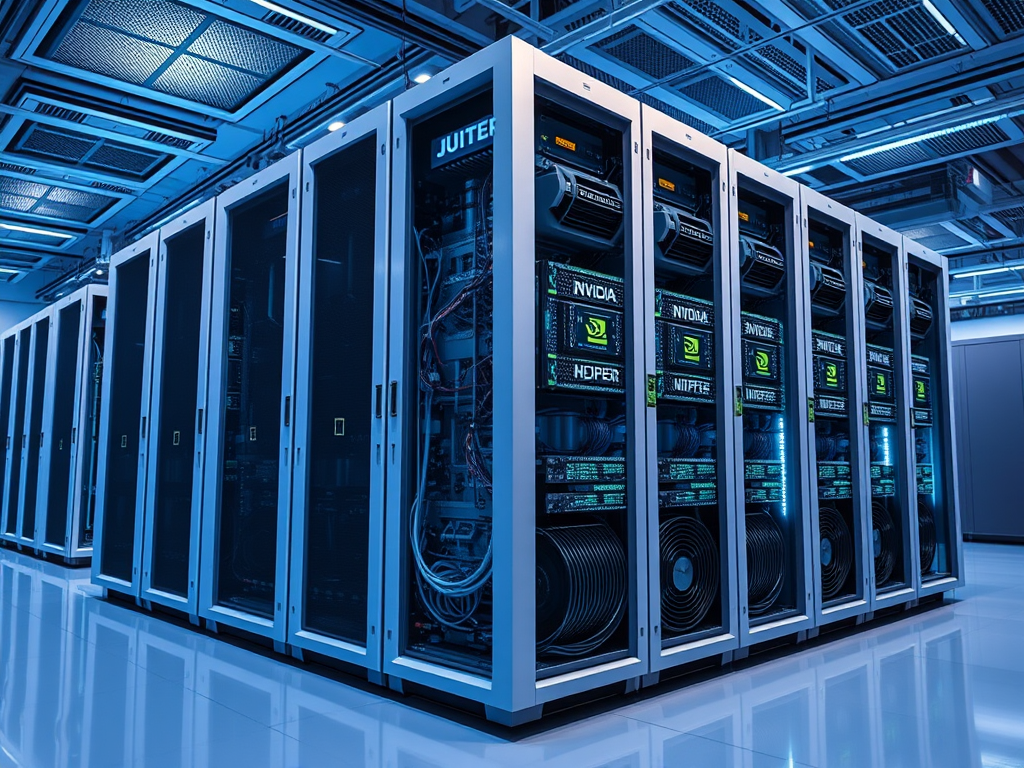
Jupiter: Europe’s Exascale AI Supercomputer Ushers in a New Era of Scientific Discovery

In June 2025, Europe launched Jupiter, its first exascale supercomputer, achieving 793 petaFLOPS performance. Powered by NVIDIA Grace Hopper superchips, it enhances research in AI, physics, and climate science while prioritizing energy efficiency. Jupiter promotes technological sovereignty and global collaboration, marking a significant milestone in Europe’s computing landscape and scientific innovation.

SN 2023zkd: AI Unveils the Extraordinary Story of a Novel Supernova

In July 2023, astronomers observed supernova SN 2023zkd, marked by an AI-assisted detection. This unique event featured an extended brightening over four years, gradual dimming, and a secondary flash, suggesting a massive star interacting with a black hole. The discovery enhances understanding of binary star systems and the evolving role of AI in astrophysics.

Milky Way’s Black Hole Spins Near Maximum: AI Simulations Reveal New Insights into Galactic Core Dynamics

In 2025, researchers discovered that Sagittarius A*, the Milky Way’s supermassive black hole, spins at nearly its maximum rate. This finding, derived from 12 million AI-enhanced simulations, reveals that its emissions stem from hot electrons in the accretion disk rather than powerful jets, reshaping black hole dynamics and cosmic evolution understanding.

AI Unveils New Physics in Dusty Plasmas: A Paradigm Shift in Scientific Discovery

A research team at Emory University used AI to uncover non-reciprocal forces in dusty plasmas, challenging existing theories in plasma physics. This marks a shift from AI as a mere tool to a collaborator in scientific discovery, suggesting significant implications for fields like fusion energy and materials science, and redefining core scientific assumptions.

A New Moon Around Uranus: The James Webb Space Telescope’s Breakthrough Discovery

In 2025, astronomers discovered a new moon orbiting Uranus, named S/2025 U1, using the James Webb Space Telescope. This 10-kilometer satellite, the first discovered since 2003, enhances our understanding of planetary systems and interactions within Uranus’s rings. It highlights JWST’s capabilities and suggests more hidden moons may exist.

Surya: The AI Vanguard in Solar Flare Prediction and Space Weather Defense

IBM and NASA’s AI model “Surya” significantly enhances solar flare prediction, improving accuracy by 16% over past models. Utilizing extensive solar data, Surya integrates advanced deep learning techniques, contributing to critical space weather monitoring. Its open-source nature promotes global research, thereby safeguarding modern technological infrastructure against solar-induced disruptions.

Quantum Resonance in Architectural Design

The article discusses the integration of quantum mechanics and resonance into architectural design, proposing buildings that harmonize with nature’s cycles. It explores historical applications, modern innovations like smart materials and energy management, and highlights potential for sustainable structures. Ultimately, this approach aims to redefine architecture as a participant in environmental energy flows.

Share with