
Technology

mRNA Technology Expanding Beyond Vaccines

Messenger RNA (mRNA) therapeutics have evolved from COVID-19 vaccines to a versatile platform for encoding therapeutic proteins, gene regulation, and genome editing. This article delves into the scientific basis, delivery systems, applications, challenges, manufacturing, and ethical implications of mRNA technologies, highlighting its transformative potential in diverse medical fields.

Organoids and Organ-on-Chip for Next-Gen Disease Modeling

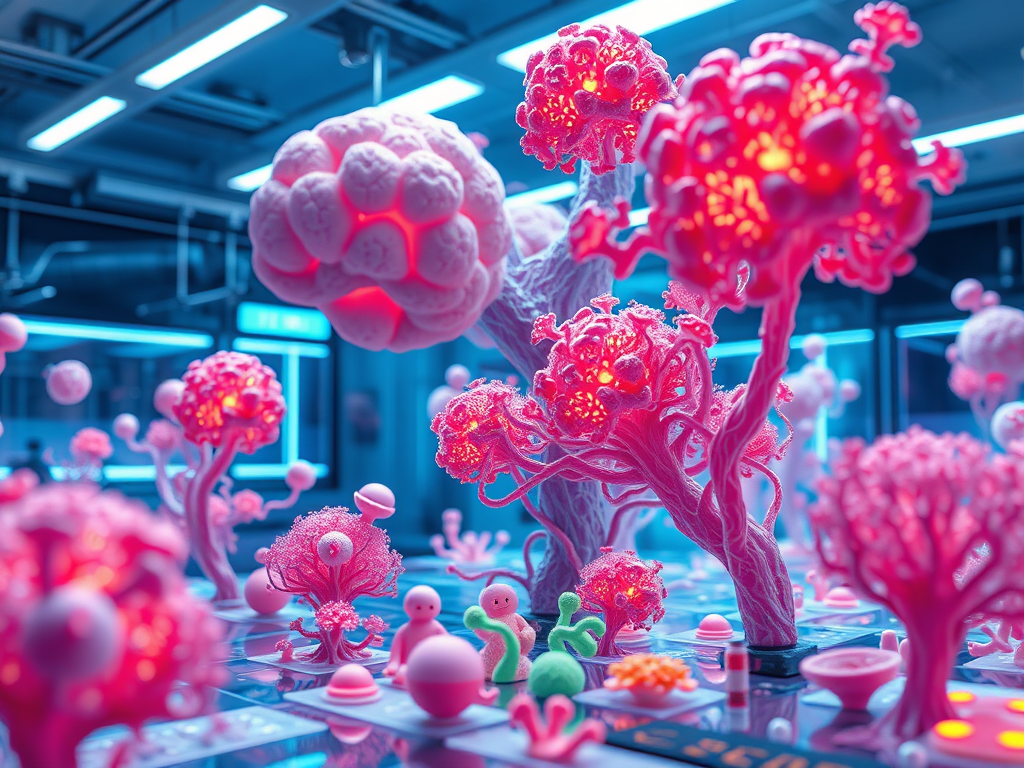
The development of 3D organoids and organ-on-chip technologies has transformed preclinical research by mimicking human tissue in vitro. These advanced models enhance understanding of human biology and diseases while improving drug development and personalized medicine. Challenges remain in standardization, validation, and ethical considerations as these tools advance biomedical research.

Microbiome Engineering and Live Biotherapeutics

The article discusses the human microbiome’s crucial role in health and disease, emphasizing the potential of microbiome engineering and live biotherapeutics. It explores ecological principles, engineering strategies, clinical applications for various disorders, and future directions such as personalized therapeutics and digital biology. The need for innovation and regulatory frameworks is highlighted.

AI-Driven Drug Discovery and Digital Biology Platforms

Artificial Intelligence is transforming drug discovery by reducing development timelines and costs while improving success rates. Advanced AI techniques, like machine learning and generative models, streamline processes from target identification to clinical trials. This evolution prompts discussions around data quality, regulatory challenges, and ethical implications, shaping the future of medicine.

The latest trends in post-modern architecture

Neo-Eclecticism 2.0 revives 1980s postmodernism with digital tools, blending styles and playful ornamentation. Trends include narrative architecture, hyper-saturated colors, fragmentation, and mixed-reality integration. Sustainability features irony in design, while AI-driven methodologies enhance generative forms, echoing past aesthetics with precision. Architects like SO – IL and FALA Atelier lead these innovations.

Sustainable Urban Design: Principles, Strategies, and Future Pathways

Sustainable urban design is crucial for managing the growing global urban population, which is expected to reach 68% by 2050. This approach integrates environmental, social, and economic principles to create resilient urban spaces. Key strategies include compactness, mixed-use developments, green infrastructure, and community engagement, promoting sustainability and equity in cities.

Groundbreaking Cybercrime Security Systems: Technologies Shaping the Future of Digital Defense

The article discusses the evolving landscape of cybercrime and the necessity for innovative cybersecurity measures due to increasingly sophisticated threats. It highlights advancements in AI, zero-trust architecture, and decentralized technologies. Organizations must adapt these systems to strengthen defenses, ensure data security, and maintain resilience against mounting cyber threats.

Revolutionizing Construction: How Smart Systems and Digital Intelligence Are Shaping the Future of the Built Environment

Smart construction systems leverage technologies like IoT, AI, and robotics to enhance design, execution, and maintenance in the construction industry. They promise increased productivity, safety, and sustainability while addressing existing inefficiencies. Despite challenges like interoperability and cybersecurity, these systems are crucial for modern infrastructure development and necessitate industry-wide collaboration and training.

Top 5 AI Gadgets of 2025: Transforming Everyday Life with Cutting-Edge Innovation

The article discusses the evolution of Artificial Intelligence (AI) into physical gadgets by 2025, highlighting five innovative devices: Rabbit R1, Samsung Ballie, Meta Ray-Ban Smart Glasses, Timekettle W4 Pro, and AIris. Each gadget enhances daily life through improved efficiency, interaction, and accessibility, showcasing technology’s transformative potential across various sectors.

The Cutting Edge of Technology in 2025: A Deep Dive into Emerging Innovations

As of mid-2025, rapid technological advancements in artificial intelligence, quantum computing, and autonomous vehicles are transforming industries and daily life. Innovations in smart home robotics, telecommunications, consumer electronics, and sustainability are also noteworthy. However, security and ethical concerns persist, highlighting the need to balance innovation with individual rights and environmental responsibility.

Unveiling Quantum Entanglement: The Mysterious Force Linking Particles and Shaping Future Technologies

Quantum entanglement is a perplexing phenomenon wherein particles become interconnected, allowing measurement of one to instantly determine another’s state, regardless of distance. This challenges classical physics concepts and inspires emerging technologies like quantum computing and cryptography. The implications for understanding reality and the universe are profound, inviting ongoing exploration and debate.

Grønt hydrogen: Fremtidens rene drivstoff

Verden står overfor utfordringer med klimagassutslipp, og grønt hydrogen, produsert via elektrolyse med fornybar energi, kan være løsningen. Artikkelen undersøker grønt hydrogens potensiale, bruksområder i transport og industri, samt økonomiske og politiske barrierer. Samarbeid og investeringer er nødvendige for å fremme grønt hydrogen som bærekraftig energikilde.

Innovation in Technology, Health, and the Environment

The content discusses the transformative impact of technological innovations, particularly AI, quantum computing, and genomics, on various sectors, including healthcare and environmental sustainability. It emphasizes the need for a balanced regulatory framework, interdisciplinary collaborations, and educational reforms to prepare future innovators, ensuring responsible progress towards a sustainable future.

Work Rewired: How Hybrid Workspaces and Tools Are Shaping the 2025 Workforce

The COVID-19 pandemic transformed work dynamics, leading to the adoption of hybrid models combining in-office and remote work. This shift necessitated reevaluations of productivity tools, workspace designs, and mental health support. Companies are increasingly focusing on employee well-being, flexible arrangements, and innovative technologies to navigate the new work landscape.

Maximizing Returns with Purpose: Strategic Impact Investing and Technological Innovation

Impact investing has emerged as a transformative approach, addressing global challenges like climate change and social inequality while generating financial returns. The Jarlhalla Group exemplifies this strategy, combining robust investment models with measurable social impact. As the sector grows, innovative tools and technology are enhancing accountability and expanding access, shaping a more purposeful investment landscape.

Digital Democracy: How Community Engagement Platforms Are Shaping Public Policy

The article discusses the emergence and significance of digital democracy, highlighting how community engagement platforms enhance civic participation in governance. It explores historical shifts, current applications like Jarlhalla and Pol.is, and future implications, emphasizing inclusivity, transparency, and the need for ethical considerations in leveraging technology for public policy development.

Creating Mindful Apps: Revolutionizing Digital Wellness for a Balanced Life

In today’s fast-paced digital world, mindfulness technology emerges as a counterbalance against cognitive overload. This article discusses the evolving landscape of digital wellness, highlighting the need for ethical design and cultural sensitivity in mindfulness apps. It emphasizes building tools that heal rather than exploit, advocating for thoughtful integration of technology and well-being.

Launching a Circular Economy Venture: From Buzzwords to Business Reality

The circular economy represents a transformative shift from the linear model of consumption towards sustainable resource management. It emphasizes waste elimination, value preservation, and natural system regeneration. Successful implementation requires innovative design, robust logistics, community involvement, and effective policy alignment, with Jarlhalla Solutions exemplifying these principles through sustainable practices and consultancy services.

Why VR & AR Are Revolutionizing Learning, Travel, and Community Engagement

Immersive technologies like VR and AR are revolutionizing learning, travel, and community engagement by redefining human experiences. These innovations enhance education, transform tourism, and foster virtual communities. Despite challenges such as accessibility and privacy, they present opportunities for inclusivity, cultural preservation, and a reimagined future for global connections.

Microsoft and NVIDIA Expand Strategic Partnership to Power Generative AI for the Enterprise

The collaboration between Microsoft and NVIDIA has established a comprehensive AI solution integrating NVIDIA’s generative AI with Microsoft’s Azure cloud. This partnership addresses enterprise demand for cohesive AI tools, enhancing productivity and deployment capabilities while reducing costs. It also supports sectors like healthcare and manufacturing by enabling advanced AI applications and real-time analytics.

Revolutionizing Society: How AI-Powered Personalization is Shaping the Future

The Age of Personalization highlights the transformative impact of AI, SaaS, and data analytics on service delivery. These technologies enable tailored healthcare, adaptive education, and community programs. Jarlhalla exemplifies this integration, offering personalized consulting. However, challenges like data privacy, biases in AI, and accessibility must be addressed as personalization evolves.

Conquer 21 Cognitive Biases: Enhance Decision-Making & Boost Self-Awareness

The article explores cognitive biases that distort human thought processes, influencing decisions and relationships. It categorizes 21 mind traps, such as the Spotlight Effect and Confirmation Bias, detailing their impacts and mitigation strategies. Understanding these biases fosters better decision-making, enhances self-awareness, and improves personal and professional interactions through conscious practice.

Microsoft and NVIDIA Expand Partnership to Revolutionize Enterprise AI with Generative Technology

Microsoft and NVIDIA have expanded their partnership to integrate generative AI into enterprise operations, announced at GTC 2025. This collaboration enhances Microsoft Azure, Microsoft 365, and Microsoft Fabric with NVIDIA’s AI capabilities. The alliance aims to democratize AI, facilitating scalable solutions across industries while improving productivity and operational efficiency for businesses.

Exploring the Anthropic Principle: Is Our Universe Part of a Multiverse Fine-Tuned for Life?

The universe’s fine-tuning raises questions about why fundamental constants allow life to exist. This alignment, described by the Anthropic Principle, suggests consciousness plays a role in observation. Multiverse theories propose our universe is one of many, with variations in constants, leading to implications about necessity, design, and human significance.

Share with