
Support


The Support category
is an essential part of our commitment to providing the best possible service to our customers.
Whether you are experiencing technical difficulties,
have questions about our product or service,
or need assistance with a particular issue,
our dedicated team of experts is available to provide the help you need.
 
At our company,
we understand that our success is directly tied to the satisfaction of our customers.
That’s why we take great care to ensure that our Support team is well-trained,
knowledgeable,
and equipped to handle any situation that may arise.
We are committed to providing prompt and effective assistance to all of our customers,
no matter how big or small the issue may be.
 
When you reach out to our Support team,
you can expect to receive personalized attention and a quick response.
We understand that time is of the essence when it comes to resolving issues,
and we do everything in our power to provide a timely resolution.
Our team is available via phone, email, and chat, so you can choose the method that works best for you.
 
In addition to providing technical support,
our Support team is also dedicated to helping customers get the most out of our product or service.
We offer training and resources to help users learn how to use our product effectively and efficiently.
We also welcome feedback from our customers and use it to continually improve our product and service offerings.
 
Overall,
the Support category is an essential part of our commitment to providing the best possible experience for our customers.
We take great pride in the quality of our support services and are always looking for ways to improve.
If you ever need assistance or have any questions,
don’t hesitate to reach out to us – we’re here to help!

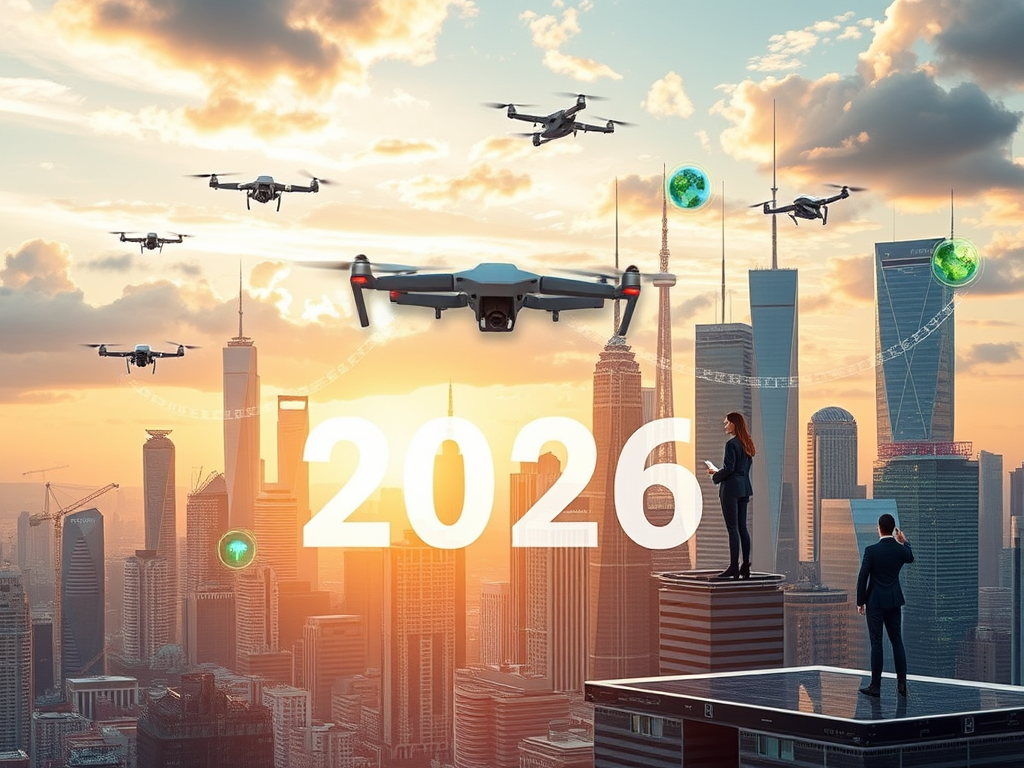
Embrace 2026: Aligning Goals with Global Trends

The opening months of 2026 present a crucial opportunity for strategic planning amidst modest global growth and rapid technological advancements, especially in AI. Effective preparation involves aligning personal, professional, and ethical goals with significant trends. This structured approach emphasizes resilience, sustainability, and mindful reflection, fostering intentional actions for the decade ahead.


Right to Repair: A Shift Toward Sustainable Consumerism

The EU’s Right to Repair movement aims to combat the throwaway culture prevalent in consumer goods by promoting repairability and extending product lifespans. New regulations encourage manufacturers to provide spare parts, repair information, and incentives for consumers to choose repair over replacement. This shift fosters sustainability and reshapes ownership values in society.

AI Data Centers: The Power Demand Dilemma

This article discusses the growing electricity demand from AI data centers, which are reshaping power grids and spurring investment in on-site generation and older power plants. It highlights the challenges of interconnection queues and community pushback against fossil fuel use, emphasizing the need for a balanced approach to energy and technology planning moving forward.

Revolutionizing Connectivity: Direct-to-Cell Satellites Explained

The advent of direct-to-cell (D2C) satellite technology promises to eliminate mobile coverage gaps by connecting standard smartphones directly to satellites. Major companies are now deploying D2C services, ensuring connectivity in remote areas, enhancing emergency communications, and expanding access to underserved populations. This shift aims to turn the concept of “no dead zones” into a tangible reality.

Navigating the EU AI Act: Key Compliance Dates and Implications

The EU Artificial Intelligence Act is a significant regulatory framework, entering into force on August 1, 2024, and establishing compliance milestones through 2026. It categorizes AI systems based on risk levels, enforces bans on harmful practices, and aims to establish responsible AI governance globally, impacting organizations and innovation within and beyond Europe.

End of Passwords: The Rise of Passkeys

For over fifty years, passwords have been the primary digital security method, but they now face major vulnerabilities due to the increase in online accounts. Passkeys, a cryptographic, passwordless authentication method, are rapidly gaining adoption, demonstrating improved security and user experience. This marks a significant shift towards more efficient digital authentication.

Understanding Yule: A Journey Through History and Modern Practices

The article explores the significance of “Yule tider,” tracing its origins from pre-Christian Germanic and Norse traditions through Christianization to modern global practices. It highlights Yule’s role in community bonding during winter’s darkness and addresses contemporary challenges like commercialization and environmental impact while emphasizing the adaptability and evolving meanings of Yuletide traditions today.

Understanding Embodied Carbon in Concrete: A Key Design Variable

The article discusses the increasing importance of embodied carbon in concrete, especially as operational energy efficiency improves. It focuses on the shift towards low-carbon materials, like geopolymers and alternative binders, driven by European policies and market demand. Strategies for effective CO₂ budgeting in design and construction practices are highlighted for engineers.

Transforming Compliance: From Burden to Integrated Design

The article discusses transforming compliance from a burdensome afterthought into an integral part of organizational architecture through a compliance-by-design pipeline. Key components include automating policy enforcement, ensuring traceability of actions, and creating reusable documentation. This approach promotes efficiency, reduces duplication, and fosters continuous improvement, ultimately enhancing organizational trust and compliance management.

Transforming Construction with Agentic AI: A Comprehensive Guide

Agentic AI has evolved from conversational systems to autonomous agents capable of performing significant operational tasks. This shift raises new risks related to governance, accountability, and cybersecurity. As organizations, especially in construction, adopt agentic AI, they must establish robust frameworks for oversight, transparency, and compliance to ensure safety and manage systemic risks effectively.

The Quantum Mechanics Revolution: 100 Years of Innovation

Quantum mechanics, established in 1925, transformed from patchwork models to a robust theory, impacting technology such as transistors and lasers. Its precision and inherent uncertainties drive ongoing debates about measurement and reality. Emerging fields like quantum computing and secure communication reflect the theory’s dual-use challenge amid significant scientific and strategic implications.

Navigating 2026: Essential Guidance for Personal Growth

By 2026, global conditions will demand strategic personal choices due to rising geopolitical tensions, economic shifts, and environmental risks. This article outlines ten key priorities for resilience and impact, including reassessing goals, enhancing digital literacy, securing data, and fostering health and community ties, emphasizing proactive adaptation for future challenges.

Navigating Change: 10 Essentials for 2026

By 2026, geo-economic fragmentation, climate issues, and tech changes will demand strategic actions across ten key domains, promoting resilience, adaptability, and impact. Individuals must reassess goals, enhance financial security, deepen digital literacy, prioritize health, and engage with local and global contexts. Active foresight and creative contributions will be essential for navigating uncertainty.

Preparing for 2026: Insights into AI, Climate, and Work Dynamics

The article emphasizes that 2026 is pivotal for navigating converging trends in AI, climate change, and workforce dynamics. It advocates for proactive, scenario-based planning rather than static goal-setting, addressing resilience and adaptability across individuals and organizations. Key themes include AI integration, sustainability, and a strong focus on skills development to thrive in an uncertain future.

Creating a Sustainable Bedroom: Health and Environment Combined

The sustainable bedroom serves as a vital intersection of health, ecology, and comfort. By prioritizing low-emission materials, efficient energy use, and optimal indoor air quality, we can transform bedrooms into restorative spaces. Addressing historical design trends and current challenges, the article provides strategies for enhancing bedroom sustainability while emphasizing ongoing innovations and practical applications.

The Truth About Heavy Metals: Science and Society

This article explores the complex relationship between heavy metals and public health, discussing their historical presence and ongoing risks in modern life. It highlights how metals like lead and mercury persist in the environment and impact human health through exposure routes. The focus is on understanding speciation, regulatory measures, and the need for better governance to mitigate risks.

Sustainable Metal Practices for a Greener Future

This exploration of metals highlights their crucial role in civilization, from ancient metallurgy to modern applications in various industries. It discusses historical milestones, current challenges, and sustainability trends influencing the future of metallurgy. The piece aims to inspire understanding of metals’ significance and promotes responsible practices in their use and production.

Sustainable Living Room Ideas for Modern Homes

This article emphasizes the importance of creating sustainable living rooms that reflect personal style and environmental consciousness. It traces the historical evolution of sustainable design, highlights modern practices and materials, and discusses future innovations and challenges. It provides practical steps for homeowners to adopt eco-friendly choices in their living spaces.

Building the Future: Regenerative Architecture

The future of architecture emphasizes sustainability beyond mere reduction of harm, focusing on regenerative design that enhances ecosystems and community well-being. Innovations include carbon-storing materials, circular building practices, and designs integrating nature, fostering human comfort. Sustainability intertwines accountability and beauty, prompting a shift towards buildings that enrich rather than deplete resources.

Planning for 2026: Navigating Uncertainty and Change

The content details a planning framework for 2026, highlighting the challenges posed by economic fragility, climate change, AI adoption, and regulatory changes. Organizations should focus on building capabilities that ensure resilience across various scenarios, as predictions become less reliable. Major global events in 2026 will also impact logistics and resilience strategies.

Exploring Poverty in Affluent Nations: A Hidden Crisis

The exploration highlights the paradox of poverty existing within wealthy nations, emphasizing that wealth does not eliminate deprivation. Using Norway as a case study, it examines historical roots, contemporary forms, and implications of relative poverty. The analysis underscores the psychological and social impacts, advocating for innovative policies and empathy to bridge the gap.

Top 5 Technologies Reshaping 2026

In 2026, five transformative technologies will reshape economies and address climate challenges: agentic AI will enhance workflows across sectors; spatial computing will revolutionize interaction with data; robotics will improve efficiency and address labor issues; bioengineering will innovate health solutions; and climate tech will support sustainable energy infrastructure.

Step-by-Step Playbook for Norwegian Net-Zero Homes

The article outlines the transition towards net-zero homes in Norway, merging traditional building methods with modern technology to achieve sustainability. It provides a detailed guide for architects, builders, and homeowners on design principles, materials, and community engagement, demonstrating how these homes honor heritage while pushing forward climate goals and energy efficiency.

Aesthetic Inspirations in Art History

The article examines various artistic themes and aesthetics that resonate with human emotions and experiences. It highlights elements like aurora, bismuth, and eldritch, showcasing their unique contributions to art. Through these themes, artists capture beauty, complexity, and the interplay of nature, technology, and imagination, inspiring creativity across diverse mediums.

Share with