
AI

Understanding Art Colors: A Comprehensive Guide to Color Theory and Techniques

Color is a crucial element in art, impacting emotion and atmosphere. Artists leverage color theory—like complementary, analogous, and monochromatic schemes—to enhance their work. Techniques such as color correction and grading, along with gradients and contrasts, enrich visual compositions, allowing artists to convey meaning and evoke feelings effectively throughout their creations.


Exploring Artistic Movements and Styles: A Comprehensive Guide

Art movements and styles have evolved throughout history, each contributing unique philosophies and aesthetics to visual creativity. This article explores various movements, such as Academic Art, Impressionism, Cubism, and others, and highlights their significance in shaping artistic expression and cultural contexts over time. Art remains a reflection of changing perspectives.

Unleashing Creativity: How NightCafe and AI Art are Transforming the Art World

Art is evolving through AI-generated creations, primarily facilitated by NightCafe Studio, a platform enabling artists to explore their imagination. This blog series highlights the significance of AI art, showcasing artists like Knoksen, who illustrate the synergy between technology and human creativity, expanding artistic expression in the modern age.

Unlocking Digital Creativity: The AI Art Revolution of Knoksen on NightCafe Studio

In the realm of AI art, NightCafe Studio empowers creators like Knoksen, who blends technical skill and artistic insight. This article analyzes AI art’s dynamics, focusing on design tools, community engagement, and Knoksen’s unique blend of engineering and narrative. It highlights the importance of authenticity amidst the flood of AI-generated content.

Revolutionizing Genetic Medicine: The Power of Base and Prime Editing in Precision Genome Engineering

Artificial intelligence and molecular engineering have advanced precision genome manipulation through base and prime editing, novel CRISPR-derived technologies that allow targeted genetic modifications without double-strand breaks. Applications include treating monogenic disorders and improving crops. This article explores mechanisms, developments, ethical implications, and the future impact of these transformative tools in genetic medicine and agriculture.

mRNA Technology Expanding Beyond Vaccines

Messenger RNA (mRNA) therapeutics have evolved from COVID-19 vaccines to a versatile platform for encoding therapeutic proteins, gene regulation, and genome editing. This article delves into the scientific basis, delivery systems, applications, challenges, manufacturing, and ethical implications of mRNA technologies, highlighting its transformative potential in diverse medical fields.

Organoids and Organ-on-Chip for Next-Gen Disease Modeling

The development of 3D organoids and organ-on-chip technologies has transformed preclinical research by mimicking human tissue in vitro. These advanced models enhance understanding of human biology and diseases while improving drug development and personalized medicine. Challenges remain in standardization, validation, and ethical considerations as these tools advance biomedical research.

Microbiome Engineering and Live Biotherapeutics

The article discusses the human microbiome’s crucial role in health and disease, emphasizing the potential of microbiome engineering and live biotherapeutics. It explores ecological principles, engineering strategies, clinical applications for various disorders, and future directions such as personalized therapeutics and digital biology. The need for innovation and regulatory frameworks is highlighted.

AI-Driven Drug Discovery and Digital Biology Platforms

Artificial Intelligence is transforming drug discovery by reducing development timelines and costs while improving success rates. Advanced AI techniques, like machine learning and generative models, streamline processes from target identification to clinical trials. This evolution prompts discussions around data quality, regulatory challenges, and ethical implications, shaping the future of medicine.

Unraveling the Chinese Room Paradox: AI, Cognition, and Consciousness

The Chinese Room thought experiment by John Searle challenges the notion that syntactic symbol manipulation equates to genuine understanding. It illustrates that while machines can simulate conversational fluency, they lack real comprehension. The article explores historical context, objections, and implications for AI, emphasizing the distinction between syntax and semantics and stressing the importance of human cognitive processes in meaningful interaction.

Top 5 AI Gadgets of 2025: Transforming Everyday Life with Cutting-Edge Innovation

The article discusses the evolution of Artificial Intelligence (AI) into physical gadgets by 2025, highlighting five innovative devices: Rabbit R1, Samsung Ballie, Meta Ray-Ban Smart Glasses, Timekettle W4 Pro, and AIris. Each gadget enhances daily life through improved efficiency, interaction, and accessibility, showcasing technology’s transformative potential across various sectors.

Innovation in Technology, Health, and the Environment

The content discusses the transformative impact of technological innovations, particularly AI, quantum computing, and genomics, on various sectors, including healthcare and environmental sustainability. It emphasizes the need for a balanced regulatory framework, interdisciplinary collaborations, and educational reforms to prepare future innovators, ensuring responsible progress towards a sustainable future.

Microsoft and NVIDIA Expand Strategic Partnership to Power Generative AI for the Enterprise

The collaboration between Microsoft and NVIDIA has established a comprehensive AI solution integrating NVIDIA’s generative AI with Microsoft’s Azure cloud. This partnership addresses enterprise demand for cohesive AI tools, enhancing productivity and deployment capabilities while reducing costs. It also supports sectors like healthcare and manufacturing by enabling advanced AI applications and real-time analytics.

Revolutionizing Society: How AI-Powered Personalization is Shaping the Future

The Age of Personalization highlights the transformative impact of AI, SaaS, and data analytics on service delivery. These technologies enable tailored healthcare, adaptive education, and community programs. Jarlhalla exemplifies this integration, offering personalized consulting. However, challenges like data privacy, biases in AI, and accessibility must be addressed as personalization evolves.

Microsoft and NVIDIA Expand Partnership to Revolutionize Enterprise AI with Generative Technology

Microsoft and NVIDIA have expanded their partnership to integrate generative AI into enterprise operations, announced at GTC 2025. This collaboration enhances Microsoft Azure, Microsoft 365, and Microsoft Fabric with NVIDIA’s AI capabilities. The alliance aims to democratize AI, facilitating scalable solutions across industries while improving productivity and operational efficiency for businesses.

Unveiling Emergence: How Simple Rules Create Complex Systems and Shape Our World

Emergence is the phenomenon where complex behaviors arise from simple interactions in systems such as ecosystems, markets, and neural networks. Characterized by bottom-up causation, decentralization, and unpredictability, it contrasts with reductionism. Understanding emergence enhances insights into intelligence, innovation, and addresses ethical and philosophical questions about control and free will in complex systems.

Unlocking Neuroplasticity: How Your Brain Can Heal, Learn, and Grow at Any Age

Neuroplasticity, the brain’s ability to adapt and reorganize throughout life, challenges the notion of a fixed intelligence. It links learning, recovery from injury, and mental health transformations to profound brain changes driven by experience and repetition. Neuroplasticity opens avenues for lifelong learning and emphasizes the importance of environment and effort in shaping the brain.

AI for Climate Solutions: Balancing Impact and Innovation

Artificial Intelligence plays a vital role in addressing climate change through adaptive solutions, such as predictive analytics and smart agriculture. However, it also poses environmental challenges, including high energy consumption and resource waste. A balanced, sustainable approach in AI development is essential to maximize its benefits while minimizing ecological impacts for a resilient future.

Leveraging AI to Build Resilient Communities: Advanced Climate Adaptation Strategies

Artificial Intelligence plays a critical role in enhancing climate resilience and adaptation. It utilizes advanced data analysis and predictive modeling to support various applications, such as risk assessment, resource management, and infrastructure evaluation. By optimizing response strategies and improving community preparedness, AI technologies foster sustainable development against climate change impacts, promoting stronger resilience.

Transforming Smart Buildings: Cutting-Edge AI for Unmatched Energy Efficiency and Sustainability

The integration of artificial intelligence in smart building technology optimizes energy efficiency and occupant comfort. Key components include sensors and automated controls, with systems enabling real-time monitoring and predictive maintenance. The technology focuses on energy cost reduction, carbon footprint tracking, and regulatory compliance, promising enhancements in sustainability and performance for modern facilities.

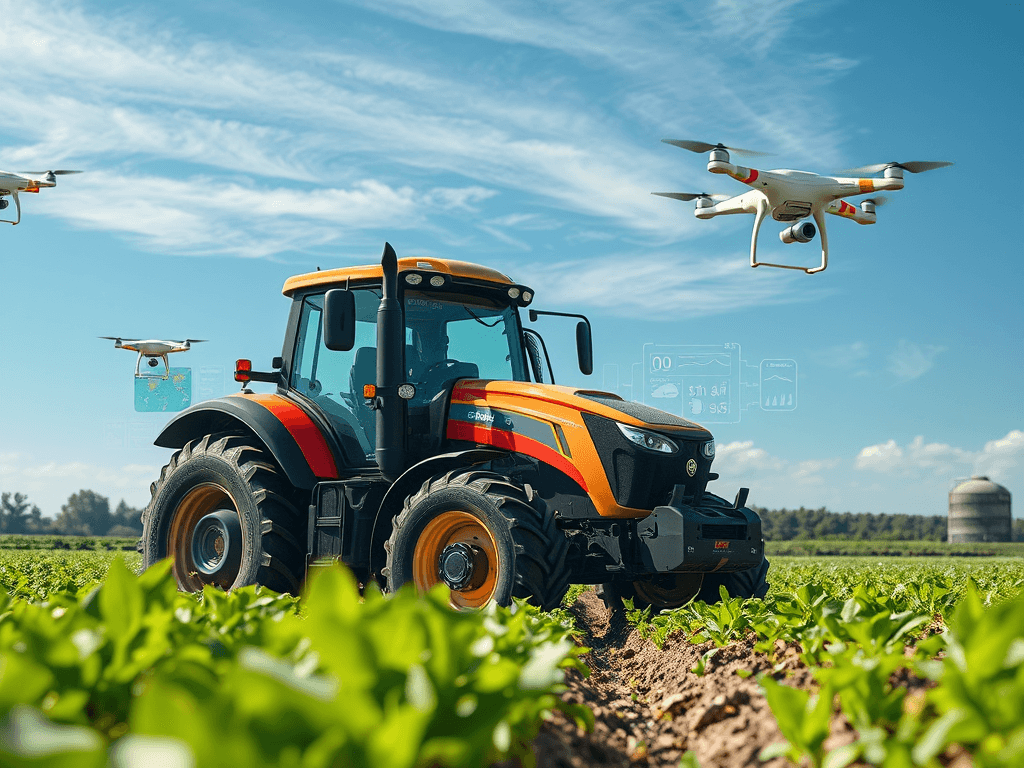
Revolutionizing Farming: How AI is Shaping the Future of Agriculture and Sustainability

The Digital Agricultural Revolution utilizes artificial intelligence to modernize farming, optimizing yields and resource use through technologies like machine learning, computer vision, and IoT systems. This transformation enhances productivity, sustainability, and economic outcomes while addressing food security and environmental concerns, marking a vital shift in agricultural practices.

Revolutionizing Climate Science: How AI is Transforming Our Understanding and Predictions

Artificial Intelligence has revolutionized climate science by enhancing modeling accuracy and predictive capabilities. Transitioning from traditional methods, AI systems leverage sophisticated machine learning and deep learning techniques for data integration and analysis. These advancements improve weather forecasting, disaster preparedness, and resource management, making them vital for addressing global environmental challenges.

Revolutionizing Environmental Science: The Power of Specialized AI Solutions

Specialized AI models are transforming environmental science and conservation by enhancing climate analysis, ecosystem monitoring, and resource management. These advanced systems improve accuracy in weather forecasting and sustainability planning, optimize renewable energy usage, and aid in wildlife protection and urban management. Their continued evolution promises greater advancements in addressing critical environmental challenges.

Comprehensive Consulting for Future-Ready Businesses

Jarlhalla Group redefines global consulting through artificial intelligence, cultural intelligence, and sustainability leadership, addressing modern complexities across various sectors. Their services include AI integration, sustainability strategies, and cultural intelligence, tailored for diverse clients. Their transparent pricing models cater to different needs, focusing on ethical transformation and community impact.

Share with