
Month: April 2025

Entropy and the Arrow of Time: Understanding the Second Law of Thermodynamics

The content explores the concept of entropy as defined by the Second Law of Thermodynamics, emphasizing its role in explaining the direction of time, energy flow, and disorder in the universe. Entropy, measured through thermodynamic, statistical, and information-theoretic approaches, governs everything from the evolution of systems to implications in information theory and biology.

Unlocking Neuroplasticity: How Your Brain Can Heal, Learn, and Grow at Any Age

Neuroplasticity, the brain’s ability to adapt and reorganize throughout life, challenges the notion of a fixed intelligence. It links learning, recovery from injury, and mental health transformations to profound brain changes driven by experience and repetition. Neuroplasticity opens avenues for lifelong learning and emphasizes the importance of environment and effort in shaping the brain.

Understanding Climate Feedback Loops and Their Impact

Unraveling the mysteries of climate change, The Climate’s Invisible Accelerators explores how feedback loops—complex systems that can either amplify or stabilize global warming—play a pivotal role in shaping Earth’s future. Understanding and addressing these loops is crucial for crafting effective climate policies and avoiding tipping points that could lead to dramatic environmental shifts.

Unlocking the Universe: How String Theory Connects Quantum Mechanics, Gravity, and the Cosmic Symphony

String Theory proposes that all particles are one-dimensional strings vibrating in various modes, potentially unifying quantum mechanics and general relativity. It requires additional dimensions and hinges on supersymmetry. Despite lacking experimental evidence, it influences cosmology and challenges reductionist views, suggesting the universe consists of vibrations, akin to a cosmic symphony.

AI for Climate Solutions: Balancing Impact and Innovation

Artificial Intelligence plays a vital role in addressing climate change through adaptive solutions, such as predictive analytics and smart agriculture. However, it also poses environmental challenges, including high energy consumption and resource waste. A balanced, sustainable approach in AI development is essential to maximize its benefits while minimizing ecological impacts for a resilient future.

Leveraging AI to Build Resilient Communities: Advanced Climate Adaptation Strategies

Artificial Intelligence plays a critical role in enhancing climate resilience and adaptation. It utilizes advanced data analysis and predictive modeling to support various applications, such as risk assessment, resource management, and infrastructure evaluation. By optimizing response strategies and improving community preparedness, AI technologies foster sustainable development against climate change impacts, promoting stronger resilience.

Transforming Smart Buildings: Cutting-Edge AI for Unmatched Energy Efficiency and Sustainability

The integration of artificial intelligence in smart building technology optimizes energy efficiency and occupant comfort. Key components include sensors and automated controls, with systems enabling real-time monitoring and predictive maintenance. The technology focuses on energy cost reduction, carbon footprint tracking, and regulatory compliance, promising enhancements in sustainability and performance for modern facilities.

Revolutionizing Farming: How AI is Shaping the Future of Agriculture and Sustainability

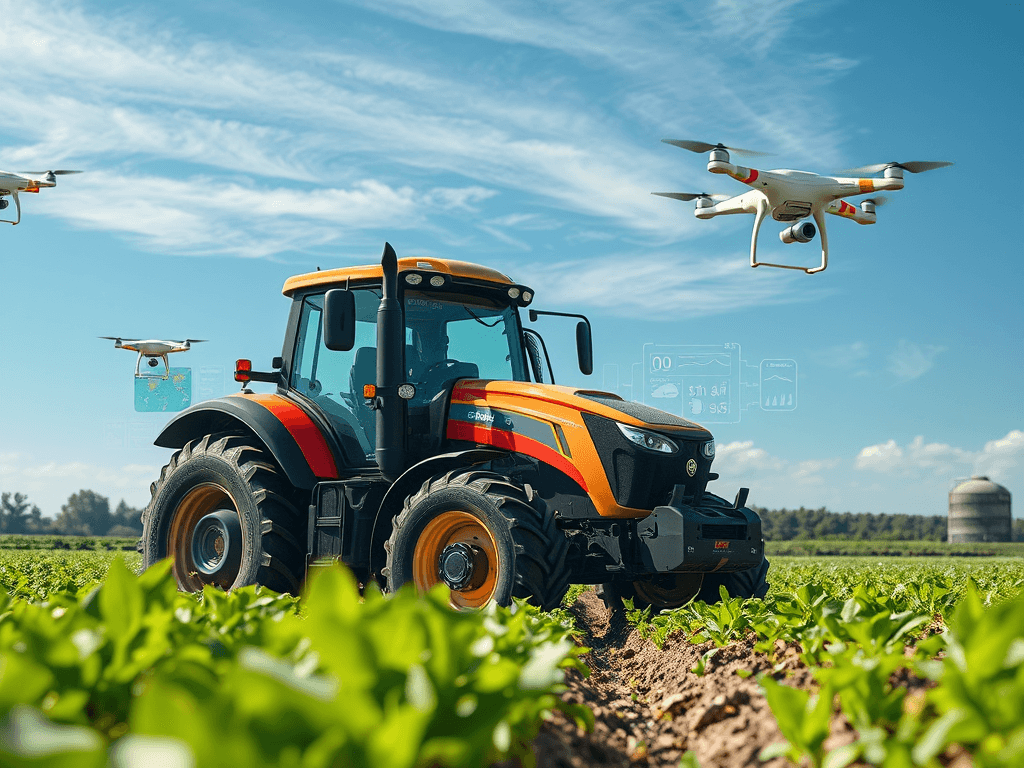
The Digital Agricultural Revolution utilizes artificial intelligence to modernize farming, optimizing yields and resource use through technologies like machine learning, computer vision, and IoT systems. This transformation enhances productivity, sustainability, and economic outcomes while addressing food security and environmental concerns, marking a vital shift in agricultural practices.

Revolutionizing Climate Science: How AI is Transforming Our Understanding and Predictions

Artificial Intelligence has revolutionized climate science by enhancing modeling accuracy and predictive capabilities. Transitioning from traditional methods, AI systems leverage sophisticated machine learning and deep learning techniques for data integration and analysis. These advancements improve weather forecasting, disaster preparedness, and resource management, making them vital for addressing global environmental challenges.

General Relativity Explained: Spacetime Curvature and Beyond

Einstein’s General Relativity revolutionized the understanding of gravity by proposed that it is a curvature of spacetime, not a force. This theory resolved inconsistencies in Newton’s model and laid foundations for modern cosmology, black holes, and GPS technology. Despite its successes, it remains incomplete and seeks unification with quantum mechanics.

Quantum Field Theory: Unlocking the Secrets of Nature’s Hidden Language

Quantum Field Theory (QFT) unifies quantum mechanics and special relativity, positing that particles are excitations in pervasive quantum fields. It has transformed our understanding of matter, force, and the vacuum. Despite its successes, QFT faces challenges such as quantum gravity and the vacuum energy problem, prompting further exploration in fundamental physics.

Revolutionizing Environmental Science: The Power of Specialized AI Solutions

Specialized AI models are transforming environmental science and conservation by enhancing climate analysis, ecosystem monitoring, and resource management. These advanced systems improve accuracy in weather forecasting and sustainability planning, optimize renewable energy usage, and aid in wildlife protection and urban management. Their continued evolution promises greater advancements in addressing critical environmental challenges.

Sustainable Urban Planning: Pioneering Future-Ready, Eco-Friendly Cities

Sustainable urban design is crucial for addressing climate change and resource consumption as urban populations grow. It emphasizes principles like compact development, transit-oriented design, and green infrastructure. Key strategies include systems thinking, circular economies, and inclusive planning. The article urges cities to transition from consumption to regeneration through innovative, collaborative approaches.

Comprehensive Consulting for Future-Ready Businesses

Jarlhalla Group redefines global consulting through artificial intelligence, cultural intelligence, and sustainability leadership, addressing modern complexities across various sectors. Their services include AI integration, sustainability strategies, and cultural intelligence, tailored for diverse clients. Their transparent pricing models cater to different needs, focusing on ethical transformation and community impact.

Discover How Jarlhalla Group Transforms AI Consulting with Ethical Innovation

Jarlhalla Group sets a new standard in AI consulting by merging technological expertise with cultural intelligence and sustainability. Unlike traditional firms, Jarlhalla focuses on human-centered and ethically grounded solutions. Their approach empowers communities, enhances ethical AI applications, and shapes a future where technology uplifts humanity, ensuring meaningful societal impact and transformation.

Unraveling Echoes: The Final Chapter of ‘The Dissonant Chime Beneath Tarhill’

Mara Linvale, a folklorist, discovers the enigmatic Dunridge Hollow through unsettling dreams and a mysterious house. Guided by a Caretaker, she confronts choices about preserving or dismantling a resonant song embodied by the Listener. Choosing the latter, she unravels the house, leading to profound silence and the loss of her memories.

Explore the Enigmatic Soundscape of Tarhill: The Dissonant Chime Chronicles

In “The Aural Delve,” the narrator explores a surreal, sound-centric realm after descending into a pulsating cellar. Embracing an experience of surrender, they become attuned to the resonant environment and the presence of a mysterious entity called the Listener. Rituals to tune their house intensify this transformation, culminating in an impending awakening.

The Future of Physics: AI, Fusion, and Thorium Technologies

The convergence of particle physics, fusion energy, AI, and thorium technology represents a groundbreaking approach to understanding and harnessing natural forces. This integration promises clean energy, enhances scientific knowledge, and offers solutions to global challenges, driven by international collaboration, innovation, and sustained funding for future advancements.

Maximizing Security: The Importance of Software Patching

Patching has become essential in software development, gaming, and AI, evolving from simple bug fixes to complex strategic processes. It addresses functionality, security, and user experience. Effective patch management requires planning, testing, and monitoring. The future involves automation, AI integration, and adaptation to challenges, driving secure and efficient digital systems across various domains.

Revolutionizing Tomorrow: How AI’s Cutting-Edge Technologies and Ethical Innovations Are Shaping Our World

The content discusses the evolution and impact of artificial intelligence (AI), emphasizing its transformative role across various sectors from early rule-based systems to modern machine learning and generative models. It highlights ethical considerations, regulatory challenges, and future trends, underscoring AI’s potential to reshape society and industry while navigating inherent complexities.

Decoding the Brain: How Neuroscience is Shaping the Future of AI and Neural Networks

The intersection of neuroscience and artificial intelligence reveals parallel structures and functionalities in biological and artificial neural systems. This exploration emphasizes shared characteristics, such as adaptive learning, while acknowledging distinct differences in processing power and mechanisms. Advancements promise applications in healthcare, research, and technology, highlighting a future of synergistic innovation.

Share with